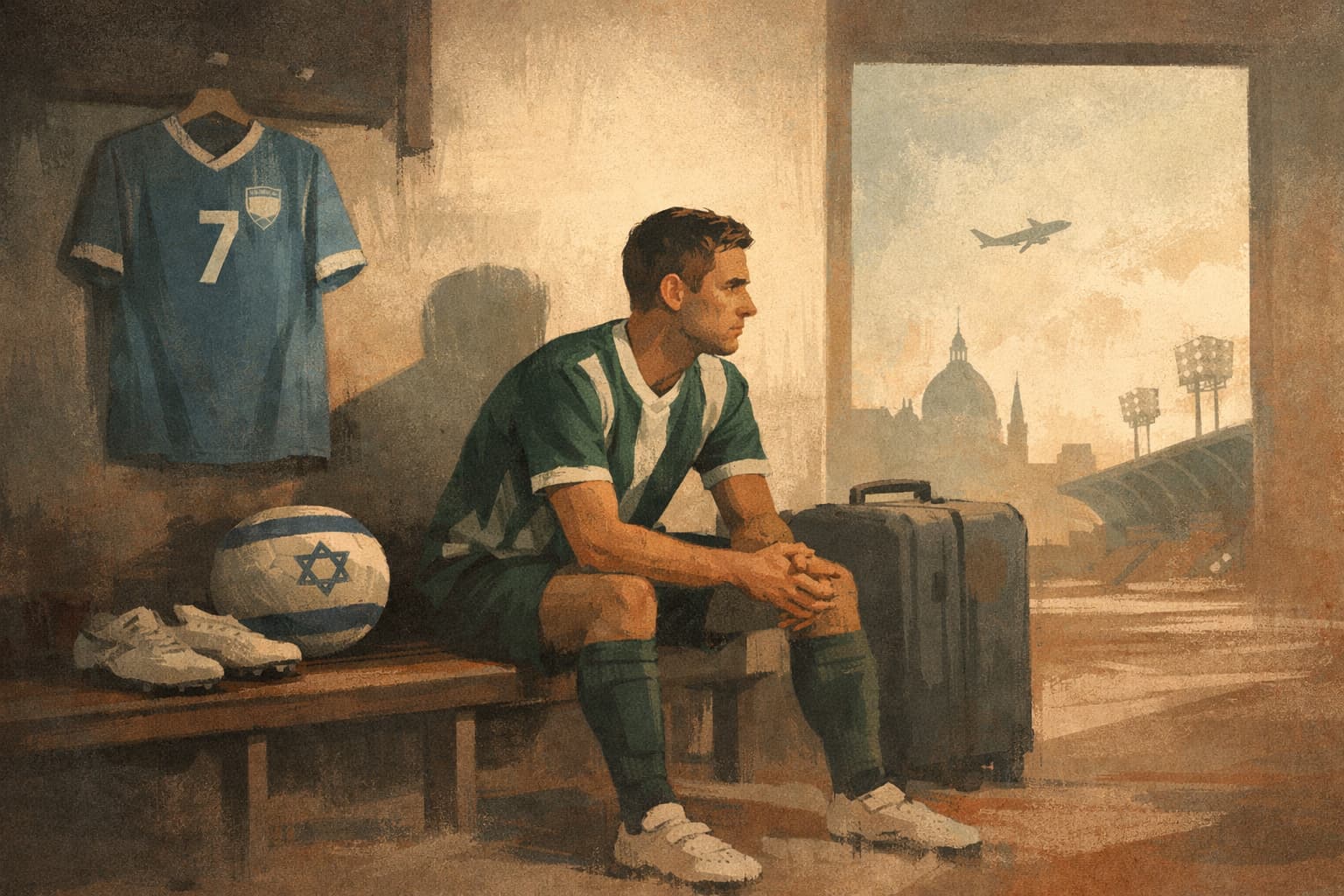
Gabi Kanichowsky: I Considered Quitting Israel Duty

Fradi midfielder Gabi Kanichowsky said in a rare interview that he once considered retiring from the Israel national team, and made clear he does not plan to return to Israel anytime soon. Speaking to the liberal-religious Shabbat newsletter HaDor, he said he is aiming for a higher level and that his move abroad was never meant to be a short-term box-ticking exercise.
Kanichowsky, who left Maccabi Tel Aviv last summer and signed with Ferencvaros, has two years left on his contract. His first season in Hungary ended with mixed feelings: he produced eight goals and five assists in all competitions, but Ferencvaros lost the league title to Győr. He also said the club won the Hungarian Cup and reached the Europa League round of 16.
Asked whether he experienced racism in Hungary, Kanichowsky replied, “Not at all. Not even from rival fans. Everyone accepted me amazingly, and I am glad I came here.” He added that last summer there had been feelers from clubs in stronger leagues, but some moves collapsed because fans protested and pressured clubs not to sign an Israeli player.
Kanichowsky described the personal toll of playing abroad, saying that being away from his family and teammates brings “many moments of loneliness.” He said that sometimes he sits alone in a hotel on Friday night before a match and asks himself, “What am I doing here?” Even so, he stressed that he and his wife are making sacrifices so he can give everything on the pitch and prove he did not come abroad “just to check a box.”
He also said his relationship with the national team has been complicated. “This may sound cynical,” he said, but when he wears Israel’s shirt now, “I feel like it is my reserve duty.” He said there were “some unpleasant incidents behind the scenes” and tension in the squad that once led him to think about quitting, but recalled his brother telling him he plays “for your country” and for friends who fell in war.
The same event, reported separately by each outlet. Open a few to compare what different newsrooms emphasize — and what they leave out.


Not the same event — other stories that share this one’s people, places, or theme: background, reactions, and follow-ups.