
CENTCOM Confirms Massive Wave of Strikes Destroyed Communications Sites in Iran
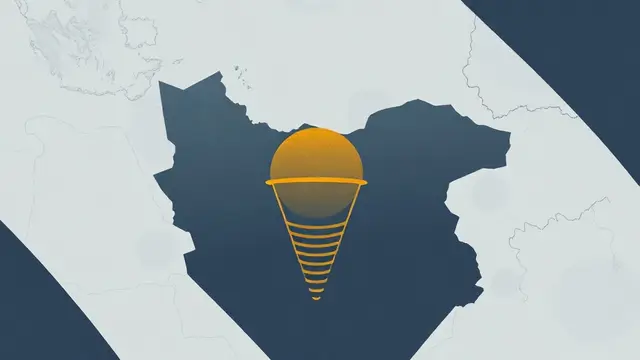
Screenshot: CENTCOM confirms a massive wave of strikes destroyed communications sites in Iran | Documentation
Efrat Briner, 20 minutes ago
U.S. Central Command completed another broad wave of self-defense strikes against multiple military targets deep inside Iran, under the direct direction of the commander in chief. The operation focused on neutralizing surveillance and radar systems, communications infrastructure and air defense sites that pose a threat to U.S. forces and international shipping lanes.
U.S. Central Command announced overnight, between Wednesday and Thursday, in an official statement that its forces completed a series of powerful self-defense strikes across Iran yesterday. The strikes are defined in the Pentagon as a lethal and direct response to Iran's ongoing and unjustified aggression, especially after the downing of a U.S. Army Apache helicopter earlier this week.
https://t.co/06XEfevOgs, U.S. Central Command (@CENTCOM) June 11, 2026
The current operation, the second consecutive wave of strikes, has put the Persian Gulf on high alert and is accompanied by harsh threats from the White House and the Pentagon, which say U.S. forces are prepared for rapid escalation if Tehran does not sign an agreement to end the crisis. According to CENTCOM, combined Marine Corps, Air Force and Navy forces used precision munitions against multiple military targets in Iranian territory. The operation dealt a severe blow to the operational capabilities of the Revolutionary Guards and to their surveillance capability in the air and maritime domains.
4 + Footage from Tehran published by the ISNA news agency | Photo: ISNA
The main targets destroyed in the wave of strikes include military surveillance capabilities and radar systems, detection and observation facilities used by Iran to monitor Western forces, communications systems, communications and coordination infrastructure of the Iranian military, and air defense sites, missile batteries and interception systems that posed a direct threat to U.S. forces and international commercial ships sailing in regional waters.
According to information provided by President Donald Trump to Fox News, the joint operation included the massive launch of 49 Tomahawk missiles alongside the deployment of fighter jets. The strikes hit strategic assets located about 65 kilometers outside the capital, Tehran, as well as along Iran's southwestern coast bordering the Persian Gulf. Trump described the strikes as especially "brutal" and "violent," and sent a harsh warning to Iran's political and military leadership: "We'll bomb the hell out of them tomorrow," if the regime does not hurry to sign an agreement.
4 + Footage from Tehran published by the ISNA news agency | Photo: ISNA
At the same time as reports of the strikes, CENTCOM's statement focuses on refuting the propaganda campaign and fake news spread by Iran's state media. The regime in Tehran claimed its naval forces had directly confronted U.S. forces and even hit an American warship in the Strait of Hormuz. U.S. Central Command issued a sweeping and unequivocal denial on X: "Fact: No U.S. warship was hit." In addition, American officials and CENTCOM rejected outright the statement by Iran's joint operations headquarters and the Revolutionary Guards that the Strait of Hormuz had been completely closed to oil tankers and commercial vessels. CENTCOM clarified that these were false claims and presented data showing that commercial traffic on the strategic shipping lane continued normally without interruption: "Commercial vessels continue to transit in and out of the Strait of Hormuz tonight." The Pentagon emphasized that the U.S. Navy did not engage in any battles or naval encounters with the Revolutionary Guards' naval arm.
4 + Footage from Tehran published by the ISNA news agency | Photo: ISNA
U.S. Defense Secretary Pete Hegseth clarified that the aggressive wave of strikes was carefully planned in order to dictate the terms of a ceasefire or future peace deal to Tehran from a position of total strength, in full coordination with the White House and the negotiating team. Hegseth described the move as part of "coercive diplomacy" aimed at extracting concessions from Iran regarding its nuclear program and regional behavior, and noted that Iran had proven helpless against the American operation "Project Freedom," which recently enabled the safe passage of millions of barrels of oil through the Strait of Hormuz under cover of darkness and under American protection. Hegseth added his own warning: "The command used the ceasefire wisely and very effectively to refine our intelligence and target bank, in a way that is far beyond the beginning of epic fury."
4 + Footage from Tehran published by the ISNA news agency | Photo: ISNA
The massive military pressure is being felt immediately. Fox News senior foreign correspondent Trey Yingst reported that President Trump revealed that senior Iranian officials at the highest level made an unusual direct phone call to him. During the secret conversation, the Tehran officials pleaded with the American president to immediately stop the Air Force and Navy bombardment of their country, a critical moment illustrating the depth of the crisis and the panic gripping Iran's leadership in the face of American firepower.
At the same time, air attack sirens were activated overnight throughout Bahrain, shortly after U.S. Central Command opened a broad and powerful bombing wave inside Iran, with heavy American B2 bombers spotted in Bahrain's skies on their way to targets. The Revolutionary Guards announced that they had attacked American bases in Kuwait and Bahrain.
4 + King of Bahrain | Photo: Reuters
Against the backdrop of the escalation, the U.S. Embassy in Iraq issued an unusual warning to its citizens, calling on them to maintain a high level of alertness and follow developments in the region. The embassy warned of possible flight disruptions and even the possibility of airspace closures at short notice, and stressed that the travel warning for Iraq remains at Level 4, the highest level. On the other hand, Iran's leadership continues to issue messages of defiance. Iranian parliament speaker Mohammad Baqer Qalibaf said that any aggression would be met with an immediate response, and President Masoud Pezeshkian made clear that Iran "will not surrender" if attacked.
Iran Bahrain Donald Trump Strait of Hormuz U.S. Central Command 0 Write a comment
The same event, reported separately by each outlet. Open a few to compare what different newsrooms emphasize — and what they leave out.


Not the same event — other stories that share this one’s people, places, or theme: background, reactions, and follow-ups.

