Israel’s Real Estate Boom Unwinds as Tel Aviv Demand Collapses

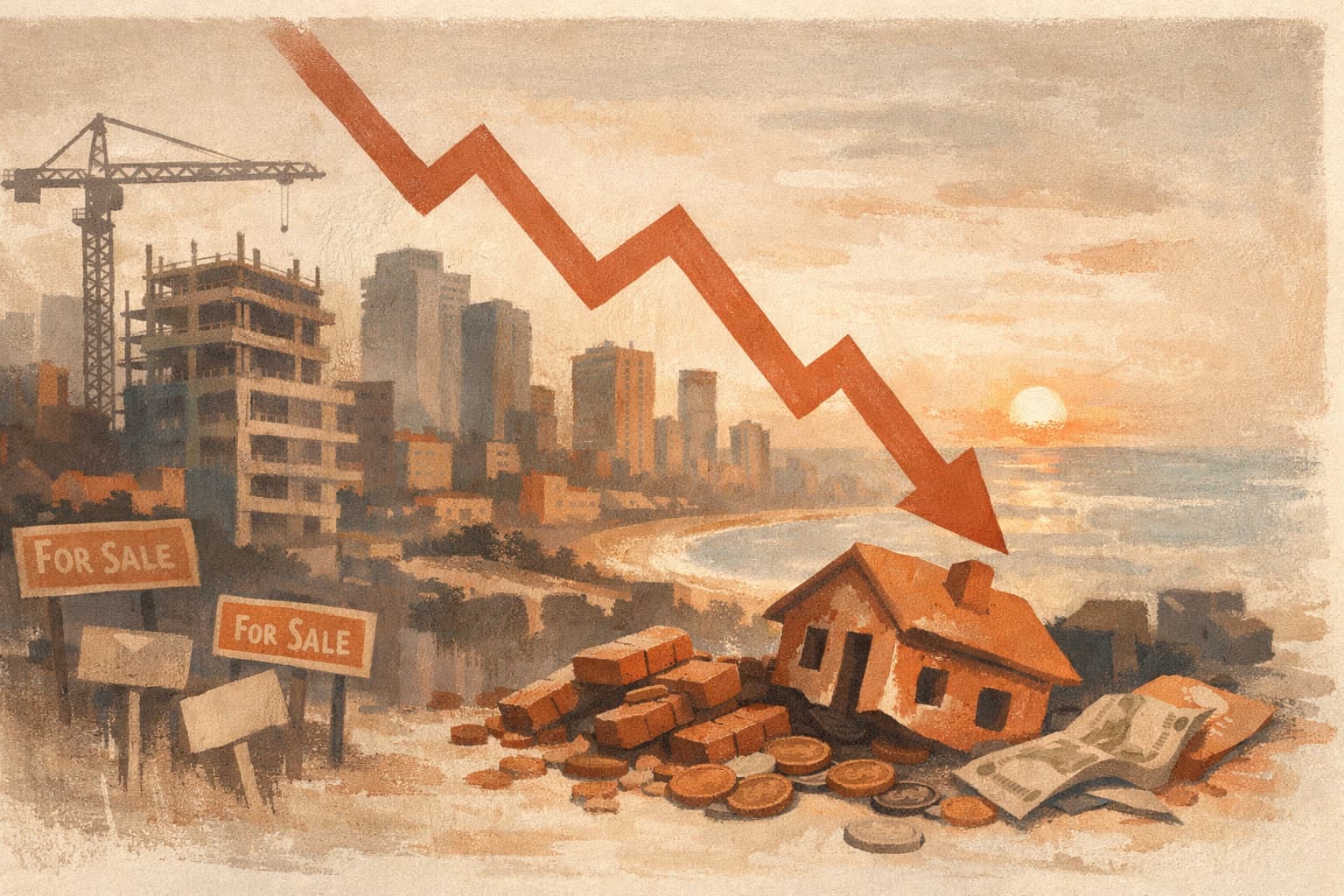
Israel’s economy is splitting into winners and losers, according to the article, with housing under heavy pressure while high-tech still shows resilience. Residential land prices fell 24.9% from 2022 to 2025, meaning anyone holding land for the past three years lost about a quarter of their invested capital. The drop hit both apartment buildings and detached homes, and the article says the long real-estate boom has ended painfully, even if it has not yet triggered a wave of developer failures.
Tel Aviv is described as the clearest sign of the downturn. Demand fell first because of emigration from Israel, especially from the center of the country during the anti-government protest wave, and then because artificial intelligence is reducing hiring in tech, especially for junior workers. That has led to layoffs and fears of layoffs, which are now weakening demand for apartments in Tel Aviv and the wider central district. In the first third of the year, second-hand home purchases in the Tel Aviv area collapsed, with April sales down 59% from a year earlier to just 86 apartments. Overall second-hand purchases in the first third of the year were down 34%, and Tel Aviv saw the sharpest drop in Israel, compared with a national average decline of 6%.
Official data from the Finance Ministry’s chief economist show how severe the market slide has become. In April, developers sold 5,081 homes nationwide, down 19% from April 2024 and 31% from March; excluding subsidized sales such as Mechir Lamishtaken, sales were 4,340, down 20% year on year and 36% from March. In central Israel, developer sales fell 45% from a year earlier, and in Rehovot alone they dropped 30%. Only 21% of buyers received developer incentives, down from 38% a year earlier. Developers are also absorbing losses because construction input costs rose 3.5% over the past year, and their April cash flow was minus 200 million shekels, excluding financing costs.
Investors are not rescuing the market either. They bought 751 apartments in April, down 43% from March, and their net holdings fell by 170 units. Nationally, home prices declined 1.2% over the past year, while new-home prices fell 3.8%, even though 29% of new homes sold were government-subsidized. The article also says foreign pressure is hurting the wider economy, citing restrictions or boycotts involving Turkey, Spain, France and Germany, plus limits from Spain and Belgium on exports from Judea and Samaria. At the same time, the stronger shekel has damaged industry, and Pratt & Whitney is closing its 50-year-old blade plant in Nahariya, cutting at least 450 jobs. Still, the article notes strong counterweights, including first-quarter services exports of 24.6 billion dollars, business services exports of 21.4 billion dollars, high-tech services exports of 17.1 billion dollars, and a return to goods-export growth in March to May.


