
Cabinet Clash Erupts Over Israeli Constraints in Lebanon
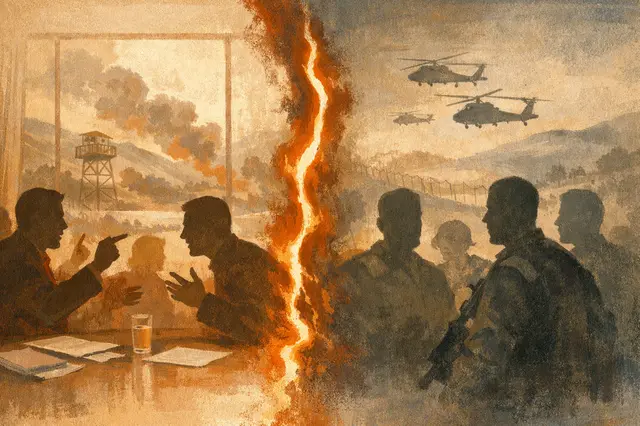
A heated cabinet meeting on Thursday night exposed a sharp rift between right-wing ministers and Israel’s top security leadership over operations in southern Lebanon. Ministers demanded that the fighting be expanded and the ceasefire arrangement be brought down, while IDF Chief of Staff Lt. Gen. Eyal Zamir and Prime Minister Benjamin Netanyahu insisted that the army has full freedom to act against immediate threats.
National Security Minister Itamar Ben Gvir challenged why the IDF was not taking proactive action against emerging threats and Hezbollah’s renewed arming, saying troops in the field feel like they are in a “shooting range.” Orit Strock joined the criticism, saying fighters feel constrained, and Itzik Vasserlauf objected that they are not allowed to respond beyond the so-called “yellow line” set in the understandings.
Zamir answered bluntly, telling the ministers, “You wanted a ceasefire.” Ben Gvir replied that he never wanted the agreement and urged using recent incidents on the ground to “collapse the agreement” and launch massive strikes on hundreds of targets. Netanyahu then backed the military position, saying there is no restriction on soldiers responding to an immediate threat and adding that the American administration understands Israel’s right to self-defense. Defense Minister Israel Katz also supported the policy, saying that despite the ceasefire’s pros and cons, there is no deliberate endangerment of IDF troops.
The immediate trigger was an incident near the village of Beit Yahoun in southern Lebanon, where a militant approached an IDF force and threw a grenade. One officer was moderately wounded and three soldiers were lightly wounded; the force returned fire and killed the attacker. At the same time, diplomatic talks continue in Washington, where U.S. Secretary of State Marco Rubio said Israel and Lebanon are moving closer to pilot arrangements for Hezbollah-free zones, with the Lebanese army replacing withdrawing IDF forces in a limited area, partly south of the Litani River. Katz said Israel’s security doctrine requires the IDF to remain in enemy territory to protect communities, and that Israel will not withdraw from security zones in Syria or Lebanon, even under U.S. pressure.
The same event, reported separately by each outlet. Open a few to compare what different newsrooms emphasize — and what they leave out.








Not the same event — other stories that share this one’s people, places, or theme: background, reactions, and follow-ups.
Ask About This Article
Duki reads it, and every newsroom on the same story, then answers with sources.