Indian 'Miracle' Exposed as Trickery in Debate Over Magic and Self-Suggestion

A special segment on the Israeli program "Davar Rishon," hosted by Moshe Mans, examined the long-running Jewish debate over whether magic, the evil eye and idolatry are real forces or just illusion and self-suggestion. The report was tied to Parashat Balak and the biblical figure Balaam, the sorcerer mentioned in the weekly reading.
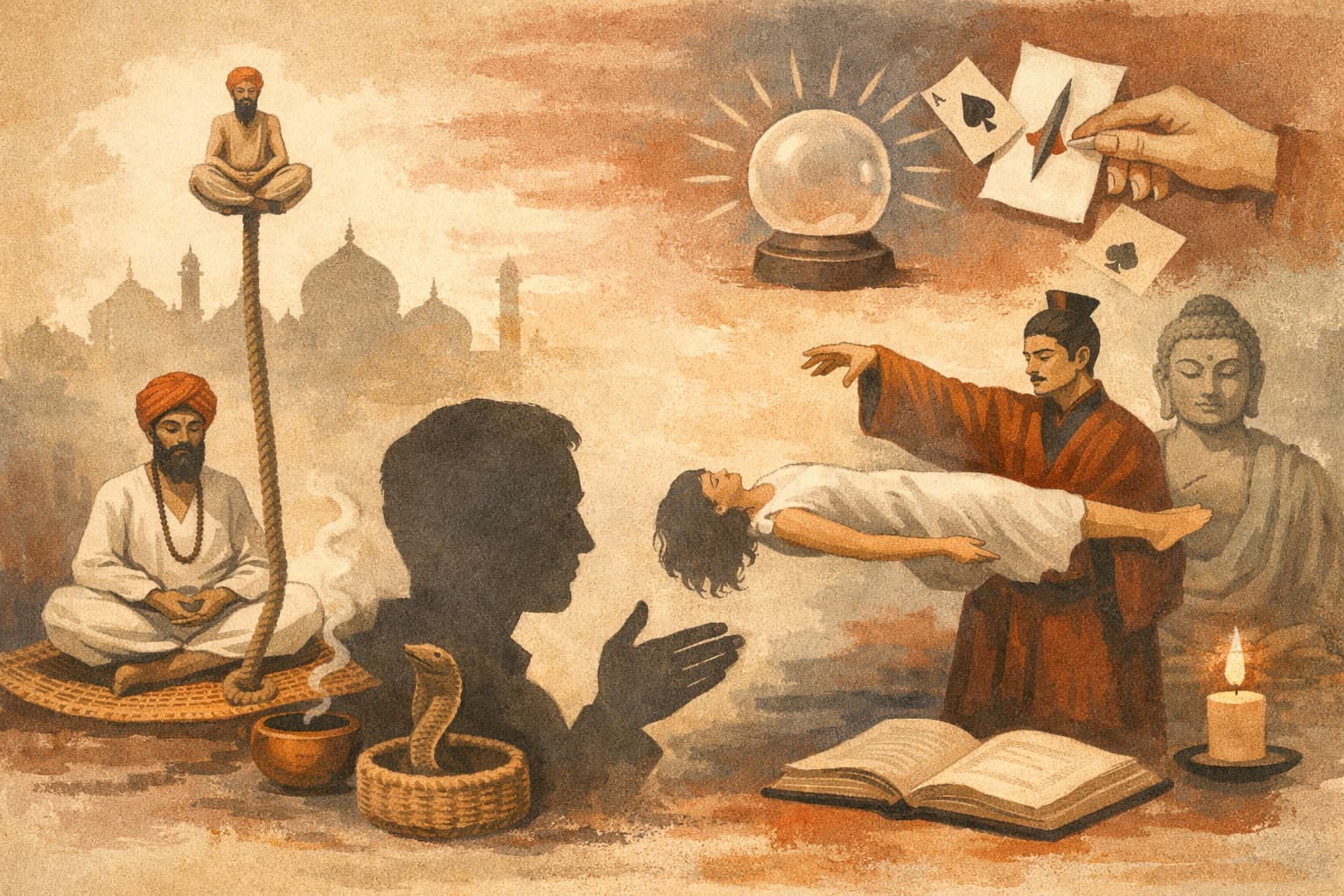
The segment showed strange-looking "miracles" from India and China, including an Indian magician apparently curing a sick child, dramatic rituals before thousands of believers, and the story of an Indian yogi said to have sat inside a tree for years without food or water. The article said the camera later revealed the deception, describing many such scenes as sleight of hand, charlatanism and mass auto-suggestion.
It explained the science behind this, saying the brain does not always distinguish between objective reality and a focused thought. According to the report, the RAS filtering system in the brain tends to highlight only what fits a person's expectation. It compared this to the placebo effect, where believing a sugar pill will heal can produce real improvement, and the nocebo effect, where expecting a curse or bad luck can trigger real symptoms.
The article then laid out two major Jewish approaches. Maimonides held that magic, astrology and spirits are not real, calling them "nonsense and vanity," and said the Torah banned them to distance Israel from superstition. Nahmanides and the kabbalists, by contrast, believed God once created forces of impurity alongside holiness, but that these powers weakened after prophecy ended and idolatry was uprooted, leaving almost no real magic today, only illusion.