Mortgage Rates May Fall Again, So Should Borrowers Refinance Now?

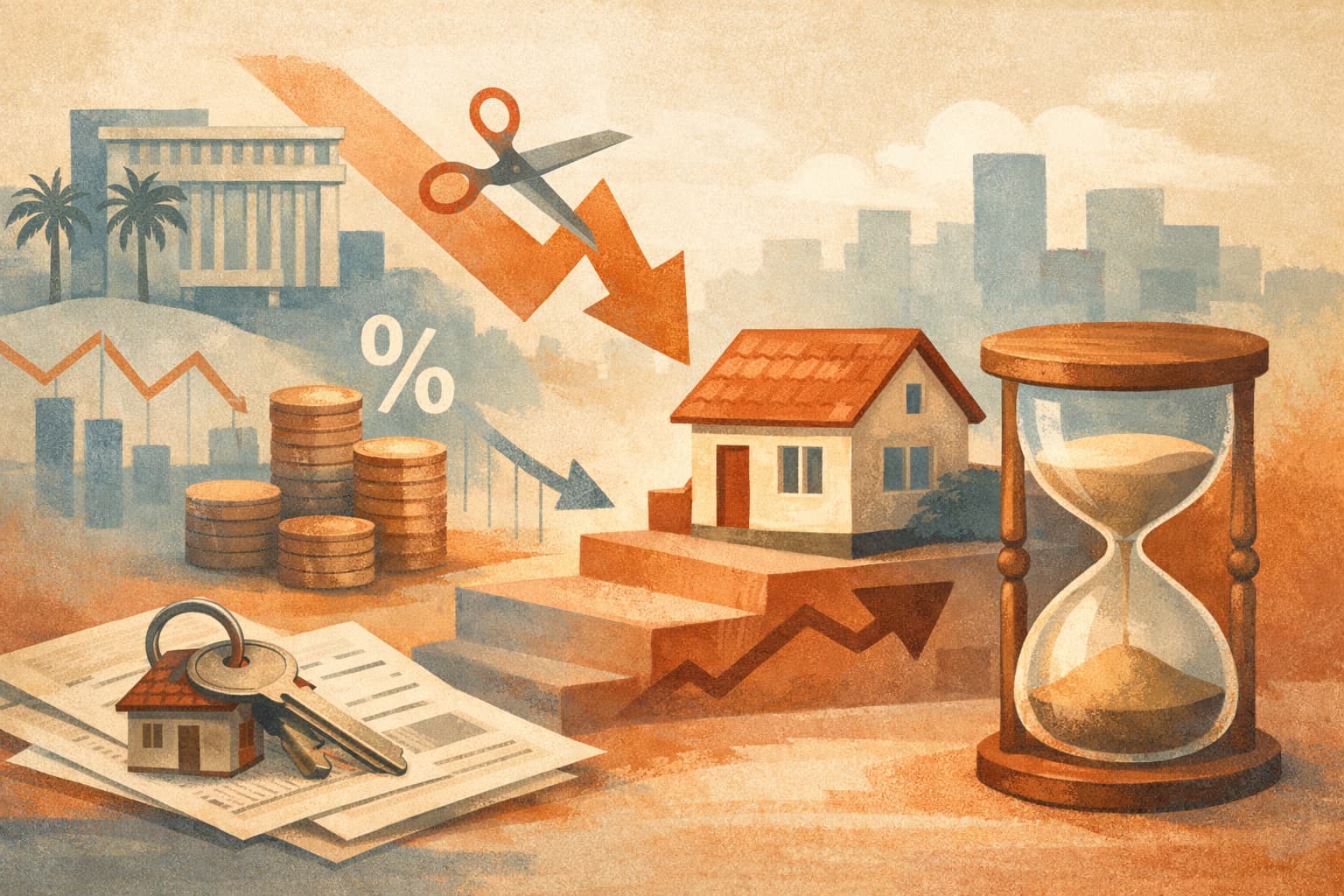
Israel’s stronger shekel, inflation staying within the Bank of Israel’s target range, and a lower risk premium are all reinforcing expectations that the central bank will cut rates again on July 6, for the second meeting in a row. Markets are pricing in a 100% chance of a 25-basis-point cut, which would bring the benchmark rate to 3.5%. Even before any decision, some mortgage rates have already edged down, and an actual cut is expected to reduce mortgage borrowing costs further.
Mortgage adviser Esther Jean Ibgui says the key question is whether refinancing fits the family’s monthly cash flow and broader financial situation. Meir Wider, CEO of Wider Mortgages, says many borrowers who locked in high rates over the past two years should review their loans, but not every rate drop justifies an automatic refinance. He says each component should be checked separately.
Wider says the prime-linked track should be examined first, because Bank of Israel cuts usually pass through almost fully to prime rates. On a 1 million shekel mortgage over 30 years, a 0.25% drop could save about 120 to 150 shekels a month, or 40,000 to 50,000 shekels over the loan’s life. For variable-rate mortgages, he says this is the time to look closely, especially if a reset date is approaching, since a 0.2% drop could cut payments by about 100 to 130 shekels a month on the same loan size.
By contrast, fixed-rate mortgages are driven mainly by government bond yields, not directly by the Bank of Israel rate, and refinancing them may involve high early repayment penalties. Wider says a fixed-rate refinance is worthwhile only if there is a substantial gap between the current rate and what is available now.
The article also notes that summer is peak season for home moves and renovations, which is lifting demand for dedicated renovation mortgages. Ron Novotny of Anglo Saxon says many second-hand buyers already budget for repairs, especially in kitchens and bathrooms. Shalom Amoyal of Bank Jerusalem says renovation mortgages are commonly taken after Passover through the summer and early autumn, can run up to 30 years, and are cheaper than consumer credit. If there is already a mortgage on the property, borrowers can usually add a renovation loan up to 75% of the home’s value, subject to a valuation after improvements. He also says borrowers are not tied to their original bank and can sometimes take a second-lien renovation mortgage elsewhere. In cases where current rates are much lower, he says refinancing 1 million shekels over 20 years could save 250 to 300 shekels a month, or about 65,000 shekels over the term.


