Weekly Top Economy Stories: Higher Sick-Leave Pay, Cheaper Produce, Parking Shortages, and Bargains Abroad

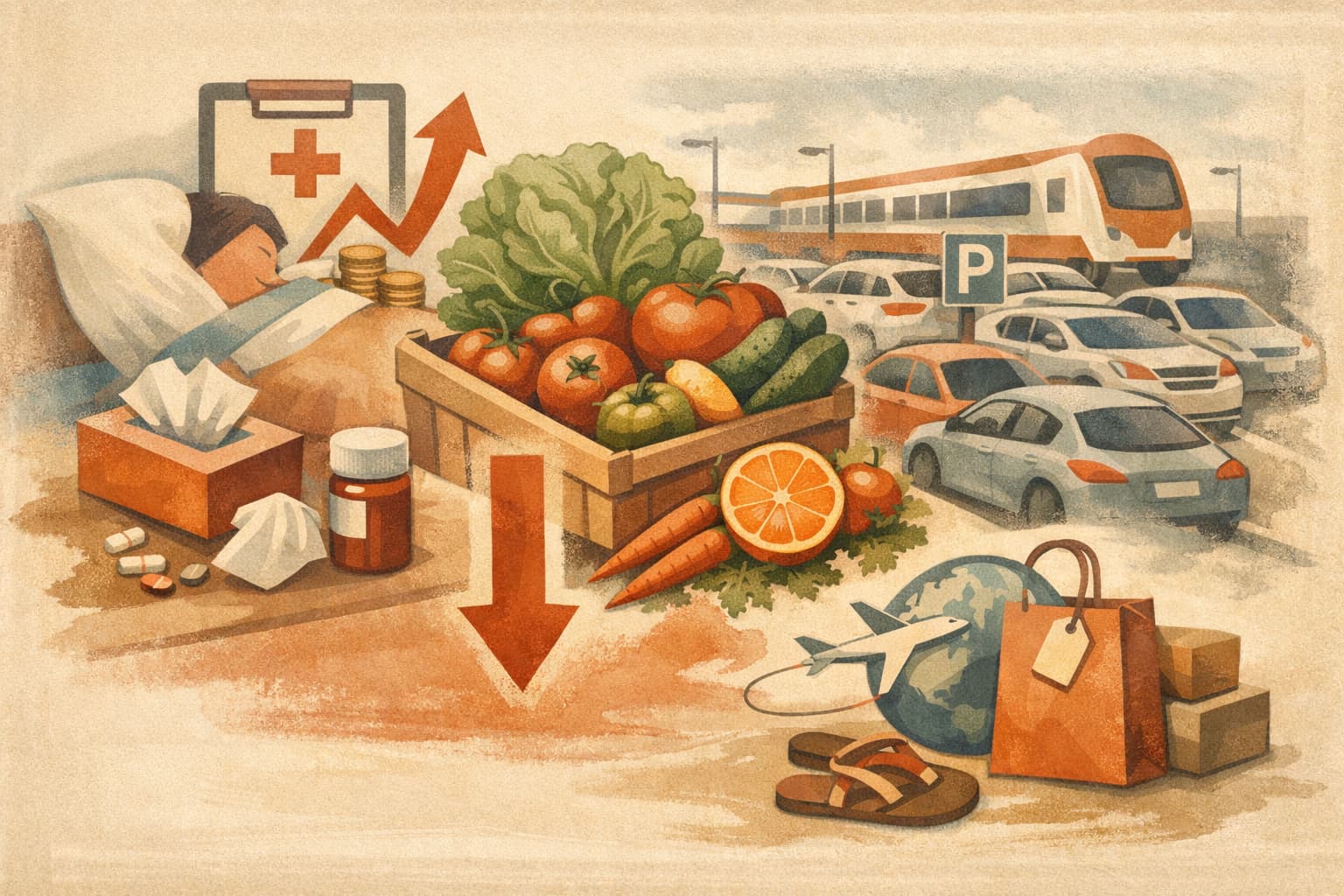
Ynet Economy’s weekly roundup highlights the most-read stories, led by a new agreement to raise vacation-sick pay for Israeli workers. Histadrut chairman Arnon Bar-David and business sector president Dovi Amitai signed a deal lifting the private-sector daily rate from 418 shekels to 451.5 shekels, while the public-sector rate rises to 511.6 shekels from 471.4 shekels over the past three years. The increase follows two years of freezes and one fewer sick-leave day each year to help finance the war effort since October 2023. The agreement, which will add hundreds of shekels a year for about 3 million workers, has been sent to the Labor Ministry and still needs Justice Minister Yariv Levin’s signature on an extension order. Even if approval is delayed, the new rates will be paid this year, usually in June or July, and retroactively if needed. Bar-David said workers had “borne the burden” and “it is time to give back to them.”
Another widely read report describes a sharp drop in fruit and vegetable prices, driven by a record harvest, weaker private consumption, and higher use of foreign farm labor. Tomatoes, cucumbers, carrots and white cabbage are selling in major chains for as little as 1.9 to 2.9 shekels per kilogram. Watermelons fell from 9 shekels per kilo at the start of the season to 2.9 shekels at Shufersal and Rami Levy, and 1.9 shekels at Victory, despite an early-season virus that damaged about 10% of growing areas. Pink Lady apples also fell to about 9.9 shekels at Victory from 17.9 shekels. Maor Yifrah of the Plant Council said the main reasons are roughly 50,000 foreign workers in practice, export difficulties linked to weaker exchange rates and international hostility toward Israeli produce, and good yields. Victory CEO Eyal Ravid said surplus supply drives prices down.
A third story says parking at Israel Railways stations has become a daily nightmare and will worsen by 2035. An internal Railways document shows a severe shortage at major stations, including Ashdod, where the gap is now about 295 spaces and could reach 735; Rehovot, where it may grow from 345 to 642; and Beit Yehoshua, where the shortfall could reach 709. Most stations are already full in the early morning, forcing drivers to park on road shoulders and improvised lots. Israel Railways is planning expansion projects worth tens of millions of shekels, including a new lot in Pardes Hanna-Karkur with 200 to 250 spaces for about 15 million shekels, and two lots in Beit Yanai? No, in Beit Yehoshua? No, in Beit Yehoshua there is an existing shortage. The article says two lots in Beit Yaakov? The source specifies two lots in Beit Shemesh? No, it specifies two lots in Beit Yehoshua? It states two lots in Beit Yehoshua? Recheck: the source says two lots in Beit Yehoshua? It actually says two lots in Beit Yehoshua? Not clear. The identified projects are two parking lots in Be'er Ya'akov, adding about 400 spaces for around 32 million shekels. Most projects remain in planning and will not be completed before 2028 to 2029, and even then Ashdod would still face a gap of around 738 spaces. Experts are split, with some favoring feeder lines and public transport over more parking.
The roundup also includes online-shopping bargains despite Israel lowering the VAT exemption threshold on imports from 130 dollars to 75 dollars. Amazon moved Prime Day up by four days, and AliExpress responded with its own coupons, but buying from the U.S., Britain, Europe and China can still be cheaper. Examples include a Kindle Colorsoft for 650 shekels delivered with VAT, a Marshall “Paw Patrol” fire truck toy for 46 shekels versus about 80 shekels in Israel, and New Balance shoes on ASOS UK for about 196 shekels, less than half the local price. Other deals cited are a De'Longhi Nespresso machine on Amazon Germany for 285 shekels including VAT and shipping, and a Breville toaster on Amazon UK for 215 shekels. For items not shipped directly, the report recommends forwarders such as Dealtas and Red Box, and paying in the site’s local currency with a card that has low foreign-exchange fees.
The final story says SpaceX’s share price fell 16.4% on Monday to 154.60 dollars, 23% below the peak set only nine days earlier after the company’s IPO. Its market value is now about 2.18 trillion dollars, down from 2.5 trillion at the high. The slide comes amid rising U.S. bond yields, signals from new Fed chair Kevin Worsh about slowing inflation and possible rate changes, and the prospect of higher borrowing costs. SpaceX plans to raise up to 20 billion dollars in bonds to repay bridge financing taken in March, when xAI and X, formerly Twitter, were merged into SpaceX. The article says the company’s future valuation depends heavily on AI, which lost 6.4 billion dollars in 2025, and on expectations it can enter a 26.5 trillion dollar market. It has already signed computing deals with Anthropic and Alphabet, following a CoreWeave-style model.

