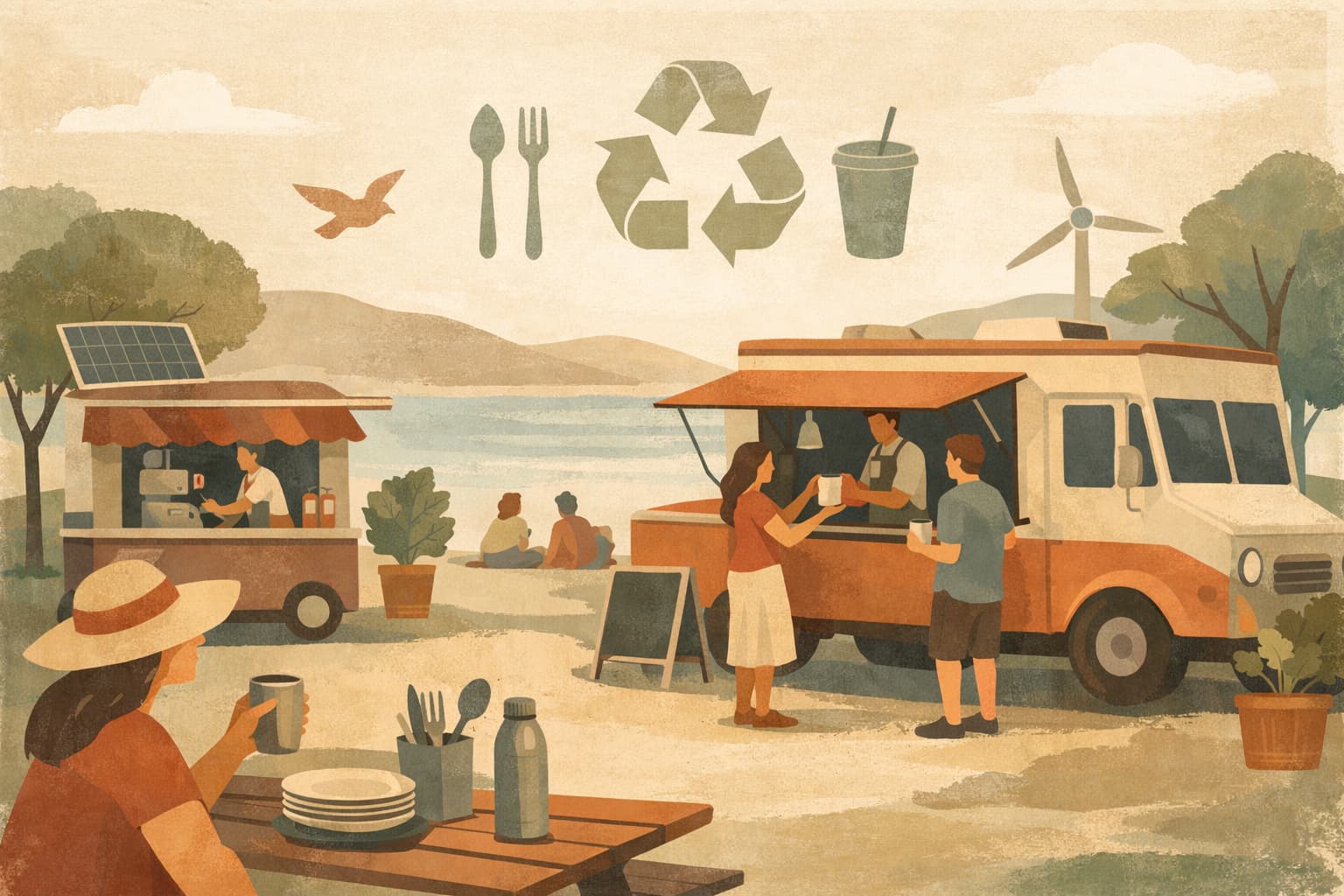
How food trucks can become greener and more sustainable

Food trucks and coffee carts have become a major trend across Israel, appearing in city parks, cultural centers, forests and nature sites. The article says there are already hundreds operating nationwide, offering everything from croissants and bagels to coffee and quick meals, and reshaping outdoor leisure with a flexible, lower-barrier business model.
The piece argues that the format also carries environmental advantages. Compared with fixed cafes or restaurants, food trucks require less land, construction and maintenance, and can activate open spaces as commercial leisure areas while drawing more people outdoors and closer to nature.
But the sector also has clear drawbacks, especially heavy use of disposable utensils, litter in open areas, food waste and air pollution from engines or generators. To reduce that damage, greener food trucks should shift to reusable tableware, offer discounts to customers who bring reusable items from home, use local and seasonal ingredients, manage stock to cut waste and donate leftovers at day’s end.
The article also points to vegetarian and vegan menus, solar power, more efficient equipment and better maintenance as part of the solution. According to Prof. Adi Wolfson, the most promising starting point for small, mobile businesses is a smarter, greener operating model, supported by consumer pressure for transparency and regulation that enforces health and environmental standards.



