Satellite Images Reveal 6,000-Year-Old Burial Culture in Sudanese Desert

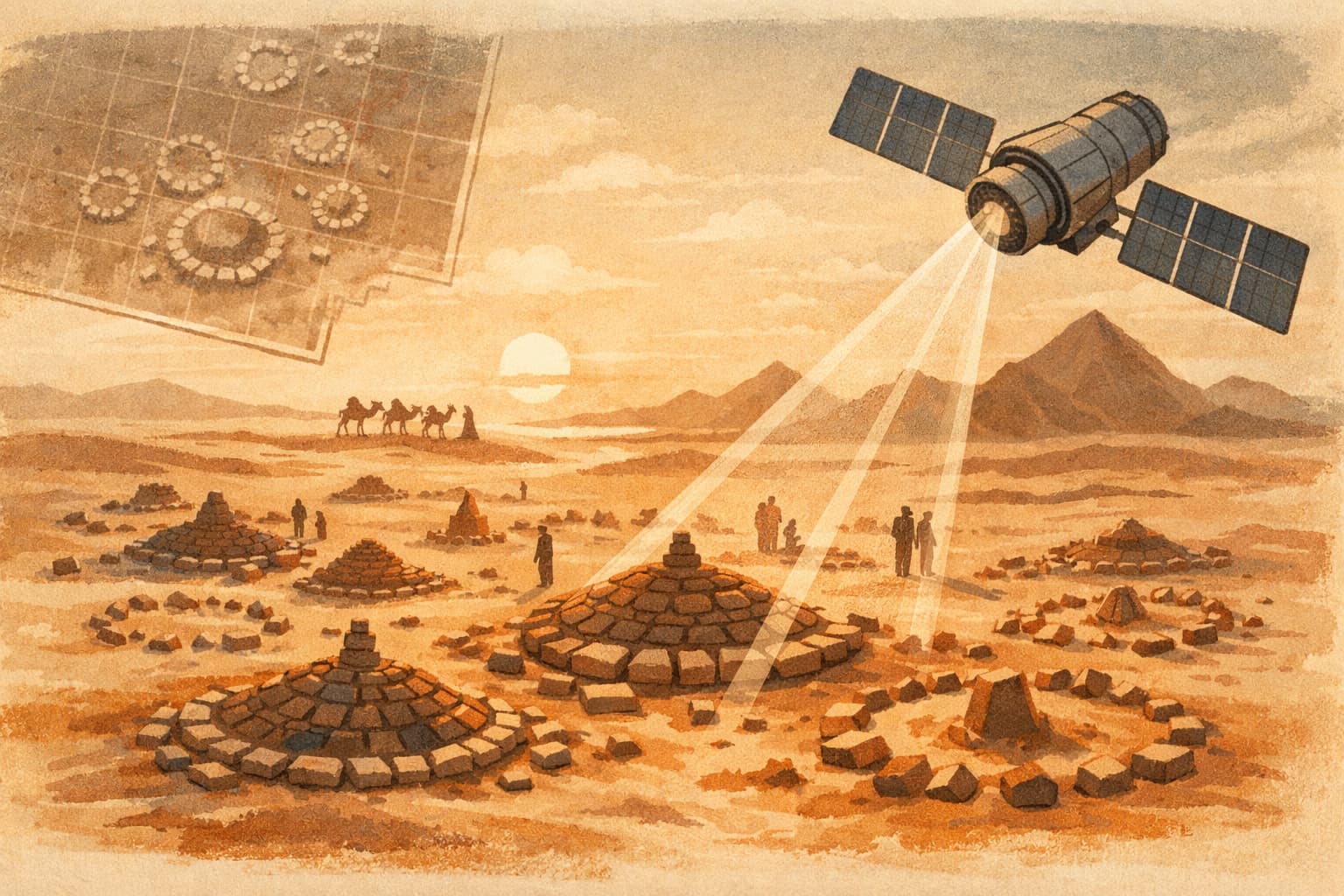
An international team of researchers has identified 260 huge prehistoric burial sites in Sudan’s Atbai Desert, between the Nile and the Red Sea, many of them through systematic analysis of satellite images rather than excavation. The sites date to about 6,000 years ago and include large circular burial structures, some up to 80 meters in diameter, containing human burials and remains of cattle, sheep and goats.
The study, published in African Archaeological Review, was led by Dr. Julian Cooper of Macquarie University with researchers from HiSoMA in France and the Polish Academy of Sciences. The team says the finds point to an organized, sophisticated nomadic culture that existed in the region long before pharaonic Egypt, spreading across nearly 1,000 kilometers of desert.
In some burial complexes, one person appears to have been placed at the center, with others and animals buried around them. The researchers say this may indicate social hierarchy and the emergence of important figures such as leaders, clan heads, or wealthy herd owners, though not the extreme inequality seen later in Egypt. They also link the animal burials, especially cattle, to status and ritual life in a period when the Sahara was drying out.
Most of the graves date to between 4000 and 3000 BCE, the end of the African Humid Period, when water sources shrank and pastoral groups had to adapt, migrate, or move closer to the Nile. Many sites were built near ancient water features, showing close knowledge of the landscape, and some were reused thousands of years later as sacred or ancestral places.
The researchers warn that many of the sites are now threatened by uncontrolled gold mining and Sudan’s ongoing civil war. They say some complexes are already being destroyed or looted, and that remains which survived for millennia could vanish within a week.

