'Generals’ Revolt' Finale Argues a Coup Can Happen Without Tanks

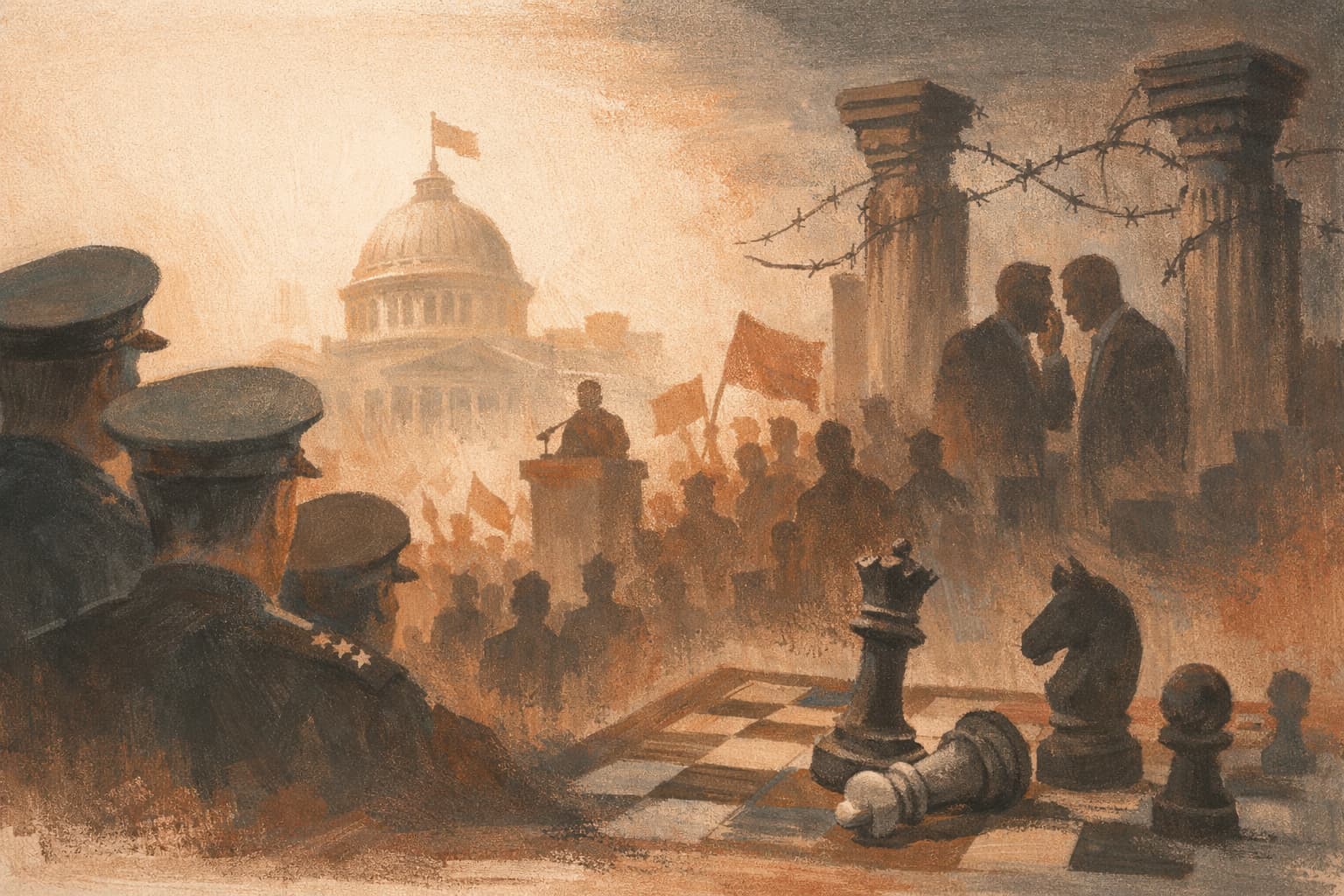
The final episode of the documentary series "Generals’ Revolt," based on Erez Tadmor’s book, argues that a military coup does not need tanks in the streets to succeed. Instead, it says, a government can lose its ability to rule when the security establishment stops accepting the authority of elected officials. The episode closes the four-part series with the claim that this erosion, not open force, was the central process.
The film focuses on the 2023 protests, which it portrays as a moment when the army became a tool of political pressure against the elected government. It says refusal to serve was not enforced, senior security officials applied organized pressure, and senior bureaucrats published documents intended to block government policy. According to the episode, the pressure was aimed at the government itself rather than at preserving discipline and civilian control.
Political commentator Tamir Morag says a small group effectively took ownership of Israel’s security assets. He argues that the fighter jets and other systems funded by the public do not belong to pilots, and that using them to pressure the government crossed a red line. He says, "We are now holding this weapon, and the weapon that is supposed to be directed against the greatest enemies of the State of Israel, we are now directing it against the Government of Israel."
The episode also examines then Defense Minister Yoav Gallant. Prof. Gadi Taub argues that instead of asserting civilian authority over the military, Gallant aligned himself with the pressure on the government, and that his warnings against continuing the judicial overhaul made him part of the political struggle. Yuval Blumberg says Hamas, Hezbollah and Iran saw only one thing, a fractured security system and an internal crisis, which signaled weakness and encouraged Israel’s enemies.
Near the end, Yaakov Bardugo links the protest crisis to the night of October 7, saying warnings of war had been heard for months but that on the decisive night the IDF chief went to sleep and the first discussion was held only in the morning. He says, "You did not give a warning of war, you gave a warning of a coup." The series concludes that the events were not isolated failures, but the result of a long-term worldview in which the professional echelon believed it was more qualified than elected leaders to make Israel’s most consequential decisions.
