
Natanel Isaac Says Disengagement Could Have Been Stopped by a Stronger Protest Movement
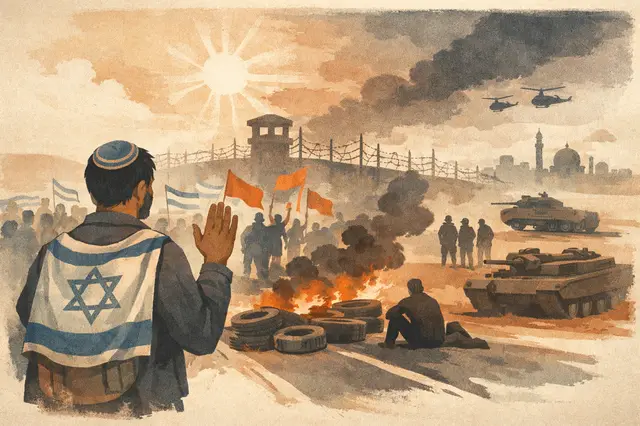
Natanel Isaac, a former director general of the Jerusalem and Heritage Ministry, says that if the national-religious public had protested in 2005 the way the Jerusalem Faction protests today, the Gaza disengagement would not have happened. In a new interview with Moshe Mans on the program "Davar Rishon," he reflects on the human chain for Gush Katif, the events at Kfar Maimon, and what he calls the national trauma of the summer of 2005.
Looking back on the struggle from Oslo through the fight over the Golan Heights and the evacuation of Gush Katif, Isaac says the national-religious camp once followed a disciplined, law-abiding line. He recalls that during the Jerusalem to Neve Dekalim human chain, activists were told not to stand even a few meters off the roadside. He says later efforts, including road blockages and the widely reported arrest of a 14-year-old girl, came only after the process was already moving, when many young people felt the plan could no longer be stopped.
Isaac sharply rejects blocking roads as a tactic, whether by ultra-Orthodox protesters, secular protesters, the Kaplan movement, or Gaza evacuees. "Anyone who goes down to block roads in the State of Israel, the police should take them, throw them out, and if necessary put them in jail," he says, arguing that elected representatives are supposed to handle such grievances in הכנסת. He also blames police and media coverage of the Kaplan protests on Ayalon Road for normalizing the tactic, saying officials, journalists, and public figures took selfies there and made it seem acceptable.
To explain why the ultra-Orthodox are more effective in protest and political struggles, Isaac recounts a story about a wealthy donor who wanted to give $1 million for Jewish identity projects. The donor met four Haredi representatives and four from religious Zionism, and ultimately gave the money to the Haredim because, he said, they presented one unified plan and knew how to work together despite internal differences. Isaac says the same is true on the street, where Haredi factions unite as one bloc when someone is arrested. He closes by linking that unity to his own wartime experience in Rafah, Shuja'iyya, and Nuseirat, saying the current costs of Gaza are a direct result of the disengagement, and that history would have been different if his camp had known how to unite then.

Ask About This Article
Duki reads it, and every newsroom on the same story, then answers with sources.