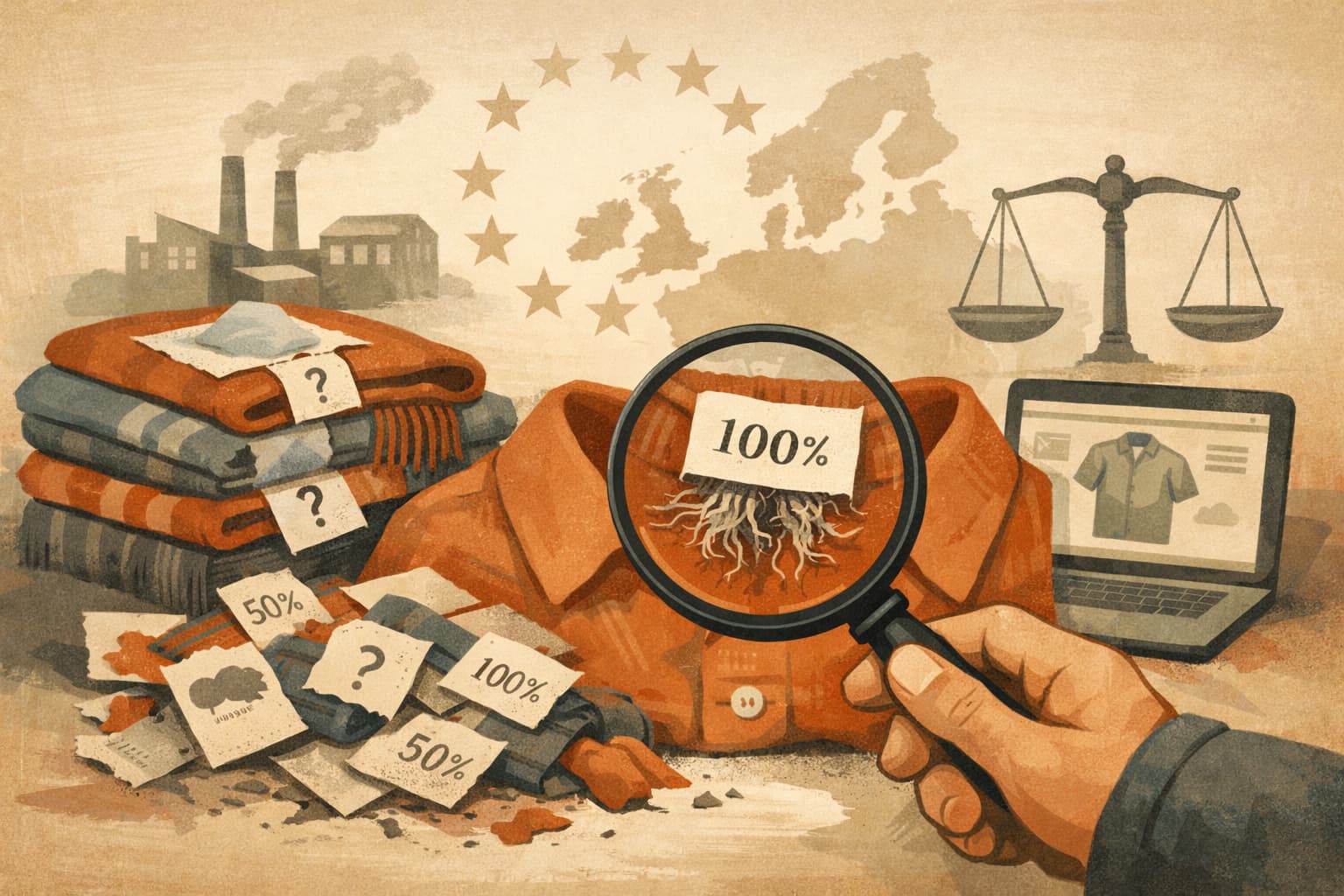
EU Probe Finds Widespread Mislabeling in Clothing Fiber Tags

A broad European Commission inspection published on Thursday found that clothing labels across Europe often misstate what garments are made of. The review covered more than 132 items bought in different EU countries and found 49 samples, or 37%, with labels that did not accurately reflect the fiber content.
Mislabeling was worst in scarves, where 80% were inaccurate, followed by shirts at 54%. Baby clothes had a 25% error rate, sportswear 13%, and sleepwear 14%. The main problems were fiber percentages that did not match the actual materials, garments containing different or cheaper fibers than declared, or labels using incorrect fiber names.
Items made from blends of natural and synthetic fibers had the highest failure rate, at 64%, while garments labeled as a blend of natural fibers had a 46% failure rate. The commission said online purchases were less reliable than store purchases, with 46% inaccurate versus 36% in physical shops. Many products, especially imports from outside the EU, also lacked basic manufacturer details, making enforcement and recalls harder.
Vanessa Capurso, a policy officer at the European Commission, said consumers and businesses need labels that reflect the true fiber composition. She added that market surveillance campaigns help ensure consumers get value for money and protect companies from unfair competition. In cases where manufacturers could be identified, regulators ordered 18 products removed from sale and imposed corrective measures on two others. The report urged shoppers to be wary of unusually low prices and to prefer products that list the manufacturer’s name, address, or website. The inspection was part of the 2025 joint product compliance campaign, which examined clothing as one of 11 categories.


