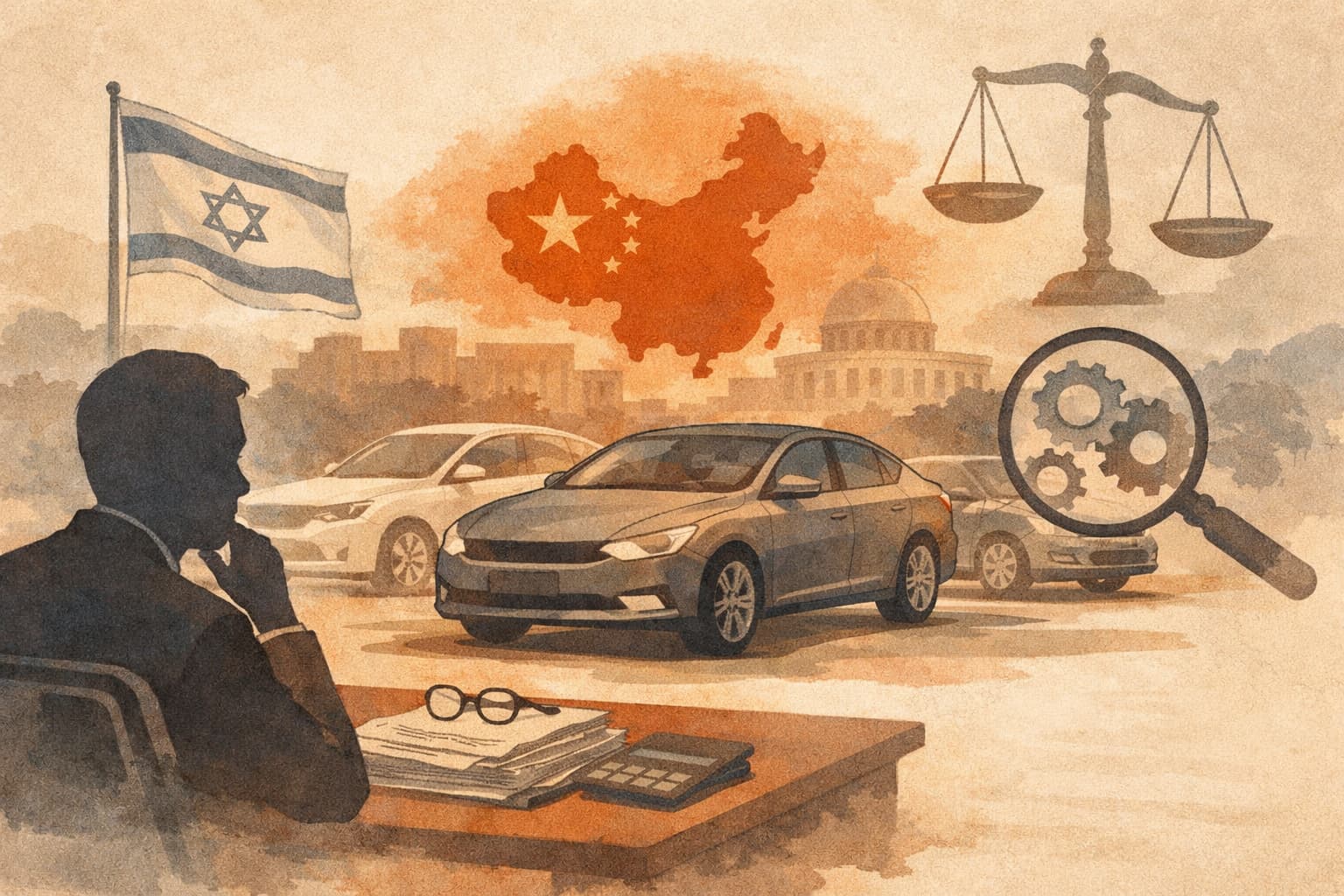
Israeli Finance Ministry Delays Government Fleet Leasing Plan, Citing Review and Possible China Concerns

Israel’s Government Vehicle Administration in the Finance Ministry has decided to postpone a planned shift of the state fleet to operating leases. Until now, most government cars were bought outright, aside from a limited amount of temporary rentals. The original plan was to begin a gradual pilot this year, with the goal of cutting operating costs, and in May 2025 the ministry said, “the state is preparing for leasing in part of the vehicles” and that the decision on which segments would be included would come after the staff work was completed.
Instead of launching the pilot, the government will continue direct purchasing of cars, expand temporary rentals for employees whose vehicles are out of service, and extend the use of vehicles already in the fleet. Industry sources say the freeze may also reflect efforts to reduce the presence of Chinese-made vehicles in the government fleet amid U.S. pressure. Finance officials fear that a general leasing tender based mainly on price would push leasing companies to offer cheaper Chinese models rather than Japanese, South Korean, or European alternatives, especially in the lower-emission segments the state wants to buy. Analysts also warn that an official move to screen out Chinese vehicles could deepen tensions with Beijing.
According to industry sources, trade bodies, some of them state-linked, recently approached Israeli contacts seeking “clarifications,” hinting that measures seen as harming China’s auto industry could have reciprocal consequences. The Ministry of Economy and Industry’s Foreign Trade Administration said it was not familiar with the matter. The government leasing tender was expected to be one of the largest ever issued in Israel, covering a state fleet of about 15,000 vehicles, including roughly 5,000 to 6,000 cars assigned to employees. Public bodies such as local authorities and government companies, which together hold thousands more vehicles, were also expected to attach their own leasing contracts to the state tender and receive the same terms. The Finance Ministry said the issue is still under review and that conclusions will determine how the plan proceeds.
