
EU envoy says ties with Israel remain strong despite dispute over foreign ministers
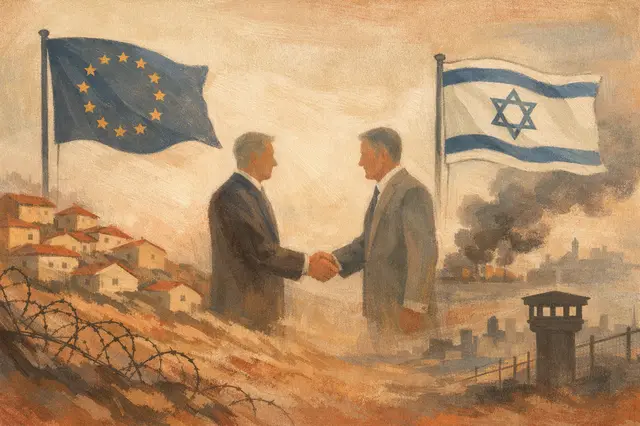
EU Ambassador to Israel Michael Mann said Thursday on ynet that if ties with the European Union are being reduced or cut, that would be regrettable, but diplomacy exists to sustain dialogue despite disagreements. He was responding to Foreign Minister Gideon Saar’s announcement that Israel was severing contact with EU foreign policy chief Kaja Kallas, after reports that she compared Israel to apartheid-era South Africa. Mann said the claim was based on an unnamed source and had not been officially confirmed, adding that the EU will continue working with Israel and hopes to reach understandings.
Mann described the relationship as fundamentally strong. He said the EU remains Israel’s largest trading partner and second-largest investor, and that Israel is deeply integrated into European research, education and cultural frameworks. He also pointed to extensive human ties, including family connections, EU citizenship, and business and academic links. At the same time, he said the relationship has become more difficult because of major disagreements over the Israeli-Palestinian conflict, though dialogue remains open and recent meetings were held between senior European officials, the president of Israel and the foreign minister.
On the main disputes, Mann said the EU is very concerned about the West Bank, calling settlement expansion incompatible with international law and condemning settler violence against Palestinians. He also said the EU wants Israel to enforce the law against perpetrators and is troubled by delays in transferring tax revenues to the Palestinian Authority. Regarding Gaza, he said the war has ended, but humanitarian aid, medical equipment and civilian assistance must be expanded, and EU aid workers need broader access.
Asked whether ministers such as Bezalel Smotrich and Itamar Ben Gvir have harmed ties, Mann said some government statements, including Ben Gvir’s remarks to flotilla activists, were unhelpful, but the EU’s relations are with the State of Israel as a whole. He said the issue of personal sanctions on Ben Gvir was discussed by EU foreign ministers a few weeks ago, but no consensus exists among member states and no decision has been taken.
Mann also said the EU is discussing how to help stabilize Lebanon after UNIFIL’s mandate ends this year, noting recent support of 100 million euros for training and equipment for the Lebanese army, bringing EU investment there to nearly 200 million euros, more than 6 billion shekels since 2022. On Iran, he said the EU is ready to help talks with the United States and that sanctions remain in place over repression, drones, missiles and the nuclear program. He said the goal is that Iran must not obtain nuclear weapons and that progress over the next 60 days will be assessed before any decisions. Finally, he said the EU is deeply concerned by rising antisemitism in Europe and has expanded its response since adopting a continent-wide strategy in 2021.



Ask About This Article
Duki reads it, and every newsroom on the same story, then answers with sources.