
How Trump’s Iran Policy Reversed from Total War to a Deal
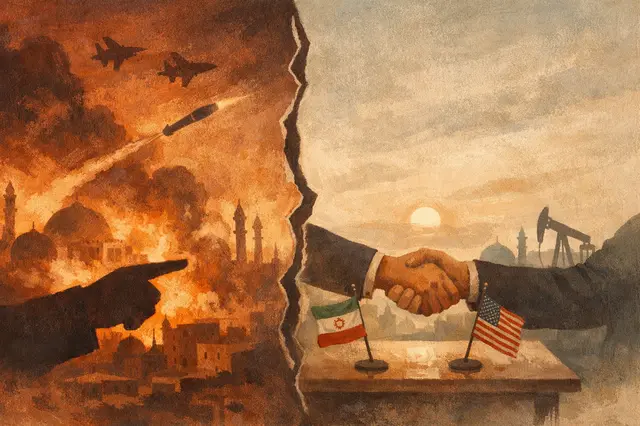
A long magazine-style reconstruction in The Wall Street Journal argues that President Donald Trump has reversed course on Iran in spectacular fashion, moving from promises of regime destruction and unconditional surrender to a June 2026 understanding that leaves Tehran stronger. The article says the shift is visible in Trump’s own posts and statements, beginning in January 2026, when he urged Iranian protesters to keep going, promised help, and warned that the regime would pay a heavy price.
On 28 February 2026, after a major Israeli air strike that killed Supreme Leader Ali Khamenei and other senior figures in Tehran, Trump declared that the U.S. goal was to protect Americans by eliminating immediate threats from the Iranian regime. In the same appearance, he told Iranians to stay home because “bombs will fall everywhere,” and urged the Islamic Revolutionary Guard Corps, the armed forces, and police to lay down their weapons or face certain death. He also said the U.S. would destroy Iran’s missile program, its missile industry, its navy, and its proxy forces.
By March, Trump was still demanding “no deal” other than “unconditional surrender,” but the war did not produce the collapse he expected. Iran shut the Strait of Hormuz, drove up fuel prices and global inflation, and launched drones and missiles at U.S. forces and allied targets. Domestic U.S. economic pressure and fears of a wider financial crisis pushed Trump toward retreat.
The article contrasts that with Trump’s 2018 exit from the JCPOA, where he denounced the nuclear deal for easing sanctions while ignoring Iran’s wider behavior. It says the new mid-June accord, signed after the rise of a new Iranian leadership under Mojtaba Khamenei, restores oil sales, funnels hundreds of billions of dollars back to Iran through regional partners and Qatari funds, and abandons Trump’s earlier hard line. At the G-7 in France on 17 June 2026, Trump called Iran’s new rulers “smart” and “good,” said he did not want an economic catastrophe, and even argued that Iran should have some missiles, because “they are not the problem.”
The same event, reported separately by each outlet. Open a few to compare what different newsrooms emphasize — and what they leave out.

Not the same event — other stories that share this one’s people, places, or theme: background, reactions, and follow-ups.


