
Can Israel's Defense Tech Stand on Its Own Without the U.S.?
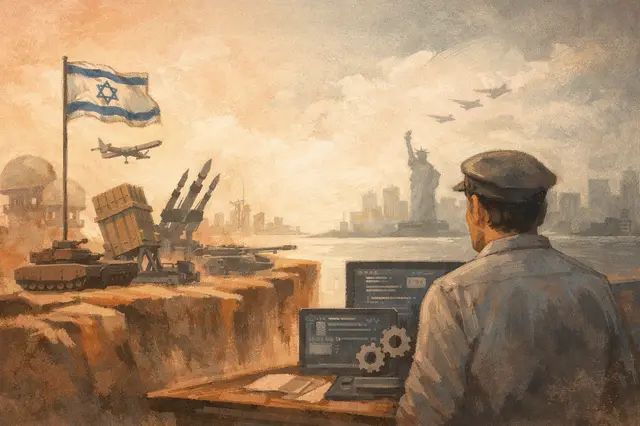
Amid growing concern that Washington could one day restrict weapons support, this Business article asks whether Israel can survive without American arms and ammunition. The central argument is not that a total break is likely, but that Israel must reduce its dependence by building far more domestic production capacity. The piece was published on June 25, 2026, and frames the debate around lessons from the recent war with Iran and the shock of October 7.
Brig. Gen. (res.) Gabi Shachor, a former Palmachim base commander and now an adviser to Massivit, said relations with the United States have never reached an embargo and probably will not. Still, he warned that Israel must strengthen independent manufacturing because wars have changed. He said the recent campaign against Iran used tens of thousands, possibly close to 100,000, munitions in just over 40 days, and argued that no modern army can wait five years to replenish shortages. Israel excels at developing interceptors, unmanned systems and electronic warfare, he said, but is weaker at producing large quantities.
Several Israeli defense-tech executives described solutions centered on flexibility, mass production and software. Udi Oster of Isatop said his company lets militaries keep operating when one drone supply line is cut off by shifting to another platform. Lital Leshem of Protego said the U.S. is a strategic partner, but sovereign states must prepare for disrupted supply chains; she cited an estimated $100 million in signed contracts for portfolio company Extend, operating in 32 countries with a valuation of up to $1.5 billion before a Nasdaq IPO. She said dual-use Israeli technology, including drones, loitering munitions, smart weapons, satellite communications and cognitive warfare tools, can turn battlefield experience into exportable products.
The article also highlighted the model of Anduril in the United States, which raised $5 billion in May at a $61 billion valuation and uses production lines that can switch quickly between weapons. Shachor said Massivit's Rapid Wings arm can make carbon-fiber and composite parts up to ten times faster, while Shachaf PY's Ran Carmi argued that if U.S. support were removed, the biggest gap would be Israel's ability to build and sustain physical defenses quickly. CodeValue's Tali Sham Tov said the real autonomy lies in code, not hardware, because Israeli firms can layer AI and navigation software onto existing platforms. Valio Gateway's Bar Klara Mendes McConnon added that global investors see Israel as the world's second-most important defense ecosystem after the U.S.
The article closes by pointing to Ukraine as a lesson in mass production and resilience, with Shachor and Leshem saying Israel should move toward larger-scale, cheaper, faster domestic output. Shachor said Israel will never reach 100% security independence, but that 80% is far better than 30%, and both he and others said the latest war with Iran has made that conclusion unavoidable.
The same event, reported separately by each outlet. Open a few to compare what different newsrooms emphasize — and what they leave out.

Not the same event — other stories that share this one’s people, places, or theme: background, reactions, and follow-ups.



