
Balaam, Moses, and the Meaning of God’s Name
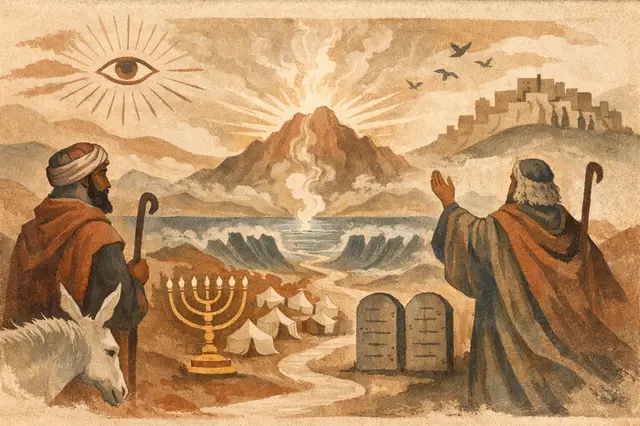
The weekly Torah essay argues that Balaam’s prophecy in Parashat Balak can only be understood through the difference between the divine names Elohim and the Tetragrammaton. At the start of the story, the Torah describes Balaam’s encounters with God only as coming through Elohim, even though Balaam himself speaks of Hashem by name. Later, however, the text says, “Vayikar Hashem el Bilam,” marking a turning point in which Balaam reaches a higher level of prophecy.
The author cites the sages’ famous statement that in Israel no prophet like Moses arose, but among the nations Balaam did. Balaam is not the only non-Israelite prophet, since Job also spoke with God, but Balaam is presented as reaching a prophetic level comparable to Moses. That comparison, the essay says, requires explanation.
The key lies in the meaning of the divine names. Elohim denotes God’s rule over nature and is also used for judges and angels. Hashem, by contrast, is the essential, sanctified name, the name that constitutes reality and expresses a special relationship with the people of Israel. The essay says this relationship is not based on Israel being inherently superior, but on God choosing Israel, as in the verse that says He did not choose them because they were numerous. Through Israel, God is revealed within history and moves creation toward repair.
The author connects this directly to the Exodus. To the patriarchs, Hashem was not fully revealed, and only the redemption from Egypt made that name manifest in the world. Balaam begins by perceiving existence through the “screen” of nature, but when he comes to curse Israel he is suddenly elevated and understands the secret of Israel’s election. At that moment, his prophecy shifts to statements such as “Hashem his God is with him” and “God brings them out of Egypt.”
According to the essay, that insight destroys the possibility of a curse and turns it into blessing. Israel’s mission is to be a “kingdom of priests,” responsible for revealing Hashem in the world and radiating Torah outward, first to one’s own life, then family, community, and ultimately all of humanity.




Ask About This Article
Duki reads it, and every newsroom on the same story, then answers with sources.