
Nutritionists Rank the Healthiest and Least Healthy Fruits and Vegetables
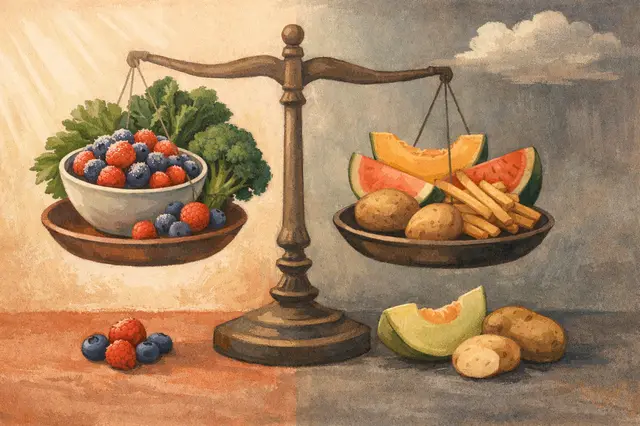
Summer brings an abundance of fresh produce, but experts say not all fruits and vegetables offer the same benefits. Julia Zumpano, a dietitian at Cleveland Clinic, says her top picks would be berries and leafy greens. She notes that berries have the highest levels of antioxidants, which help fight inflammation linked to chronic diseases including heart disease and several cancers. Almost all berries, including strawberries, blueberries, raspberries and blackberries, provide those benefits, and they also tend to have a better balance of sugar and fiber than many other fruits.
Zumpano cites raspberries as an example, saying one cup has about 5.4 grams of sugar and roughly 8 grams of fiber, compared with nearly 14 grams of sugar and just over 1 gram of fiber in a cup of honeydew melon. She also says grapes, while often seen as a healthy snack, have a higher sugar-to-fiber ratio. By contrast, fruits in the melon family, such as melon and papaya, are less recommended because they contain more sugar, more calories and fewer protective compounds than berries. High sugar intake can cause sharp blood sugar spikes and, over time, raise the risk of cardiovascular disease.
Among vegetables, leafy greens are described as the clear winners. Kale, spinach, Swiss chard and dark lettuce are packed with vitamins, minerals and fiber while remaining very low in calories. Zumpano says these are the vegetables she recommends most because they are nutrient-dense, high in fiber and supply a wide range of essential compounds. Studies have found that regular consumption of leafy vegetables can help balance blood sugar and may reduce the risk of type 2 diabetes. They are also a strong source of potassium, which helps regulate blood pressure.
At the bottom of the list, Zumpano places the white potato, though she stresses the problem is usually how it is eaten, especially as fries. Peeling removes much of its fiber and nutrients, and high-heat frying creates acrylamide, a substance considered potentially carcinogenic. Still, experts say potatoes do not need to be eliminated entirely because they contain potassium, iron, vitamin C and beta-carotene, which the body converts into vitamin A. Professor Debbie Petr from the University of California adds that frozen berries are not inferior to fresh ones and can even be more nutritious if frozen soon after harvest. Her bottom line is that the best produce is what people will actually eat regularly, and the worst is what sits in the refrigerator until it spoils.

