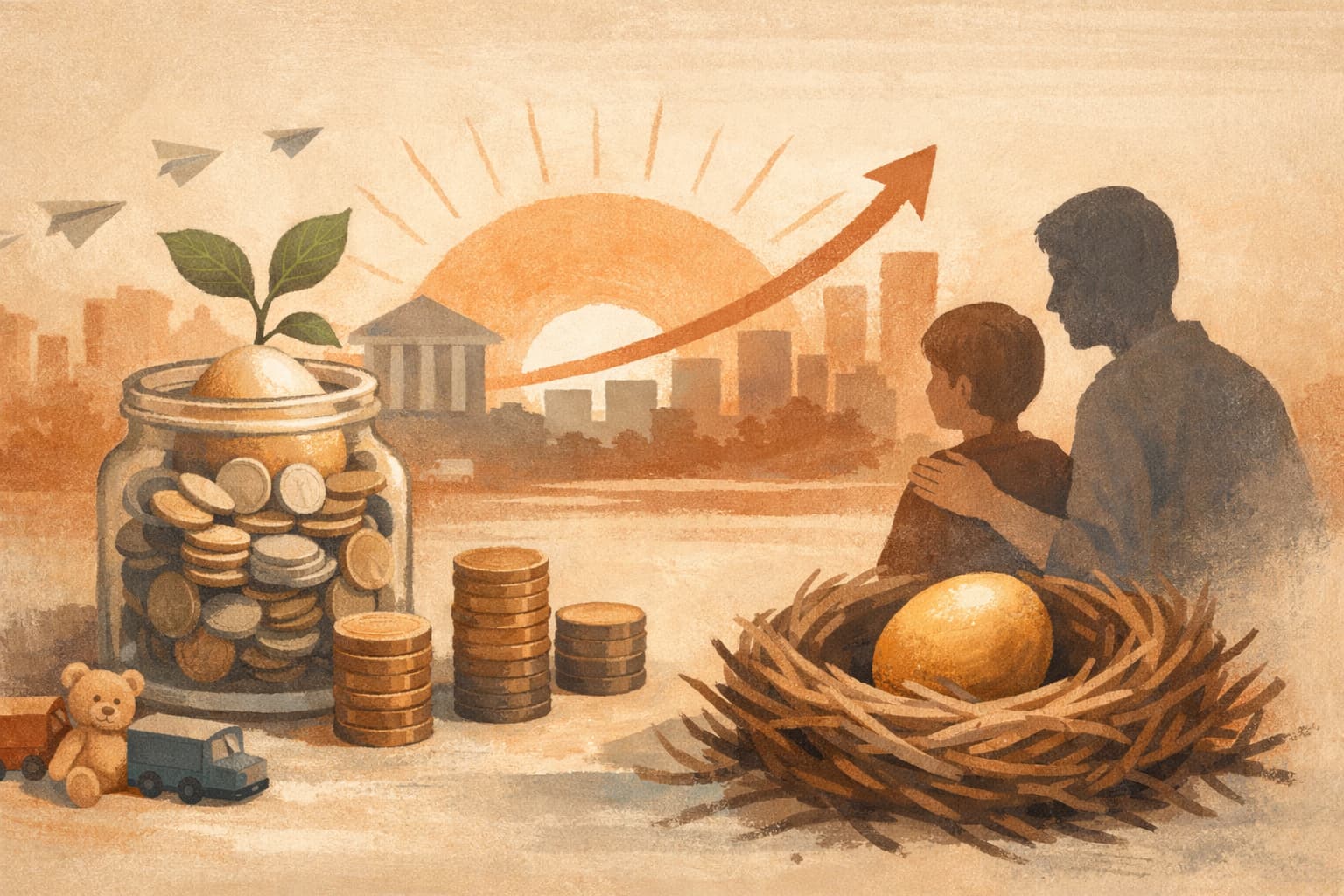
How a Small Monthly Investment Could Grow Into a Meaningful Nest Egg for Children

The article argues that parents should not only worry about their children’s present, but also take practical steps for their future. Its central example is a small but regular monthly investment, which it says can accumulate significantly over time if done consistently.
Using a simple calculation, it says that saving 180 shekels a month, an amount often spent without much thought on restaurants, entertainment, or unnecessary purchases, could grow to about 118,000 shekels after 21 years. The piece adds that failing to save that same 180 shekels each month would mean giving up that amount when a child is ready to start a home and needs every shekel.
The article says the key is turning saving into a habit, with money deducted automatically every month instead of relying on reminders or repeated decisions. It presents this approach as useful not only in education and skills, but also in finances, where steady investment can produce long-term results.
As a practical option, it promotes “Best Kids,” a savings policy from Hachshara Insurance. The program lets parents open an account easily, choose a monthly deposit amount, and invest for their child through 26 savings tracks, including kosher options, managed by six leading Israeli investment firms, with the ability to switch tracks without exit fees or taxes.
The ad highlights a 37.82% cumulative return in the Mor-Machnes track over the past 12 months, says the minimum monthly deposit starts at 180 shekels or a one-time deposit of 5,000 shekels, and notes that data are current to the end of May 2026. It also states that past performance does not guarantee future results and that the company is not providing pension advice.


