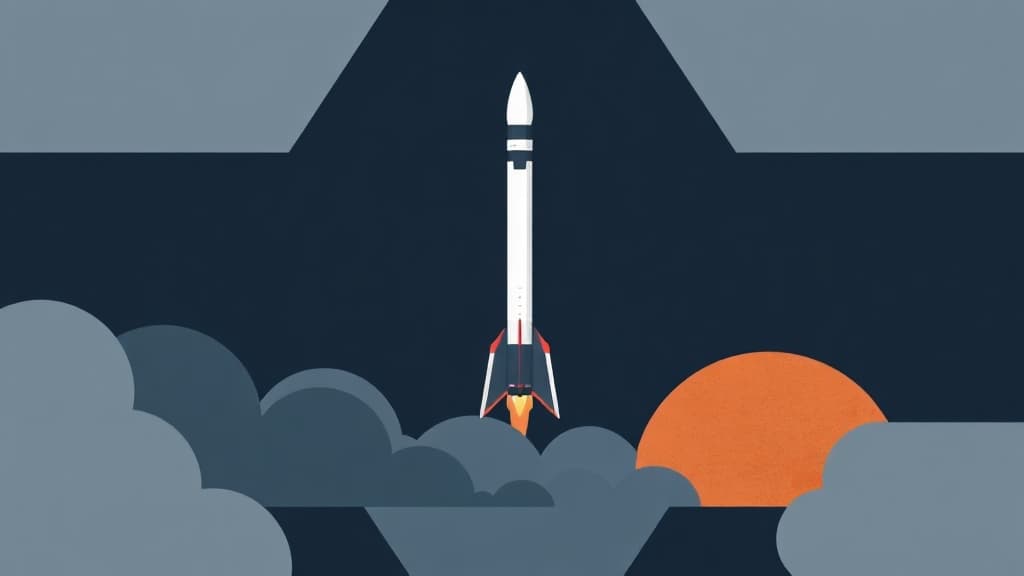
At the heart of the biggest IPO ever is a 124-Meter Rocket

At the center of Elon Musk’s ambitions to send people to Mars and push SpaceX toward the largest public offering in history is a giant 124-meter rocket called Starship. The AI and satellite conglomerate led by the world’s richest man has poured more than $15 billion into developing the largest rocket ever built. In documents filed by SpaceX ahead of the IPO scheduled for tomorrow, the company said the rocket is central to its future growth plans. The company hopes Starship will become the world’s first fully reusable launch system. Reusing both stages of the rocket, while greatly increasing payload capacity, would allow the company to launch more equipment into space, carry larger satellites, and eventually carry out missions to the Moon and Mars at far lower cost. That promise sits at the core of some of the company’s most ambitious forecasts. "Our becoming a civilization spanning multiple planets will significantly define the expected lifespan of consciousness, because we will no longer put all our eggs, literally and metabolically, on one planet," Musk wrote in a post on X in September 2024.
However, Starship is still far from operational. U.S. regulators grounded the rocket after the company lost control of the booster during a test flight in May. Turning it into a reliable transport system will require technical breakthroughs, including the ability to refuel the spacecraft while it is in space. Powered by 33 of the company’s Raptor engines, Starship dwarfs even the Saturn 5 rocket used by NASA in the Apollo Moon missions. "Starship is fundamental to any future venture SpaceX wants to pursue," said analyst Caleb Henry of Quilty Space. The company says its current Falcon rockets cannot support many of these future plans. According to SpaceX, Falcon 9 and Falcon Heavy cannot deploy the next generation of Starlink satellites at the required scale, let alone support the idea of building data centers in space.
The company has made some progress. In October 2024, it managed to catch the returning booster using monstrous mechanical arms known as "Mechazilla" at its facility in Texas. That was considered a milestone in its efforts to create a rapid reusable launch system. Over the past decade, SpaceX has turned reusable boosters from a controversial idea into the foundation of the commercial launch market. Falcon 9 has taken part in hundreds of missions, helped lower launch costs, and cemented the company’s position as the leading provider of commercial access to space. "SpaceX has no reason to lower its prices," said Greg Autry of the University of Central Florida. "Current market demand is higher than supply."
That position helped SpaceX build Starlink, the broadband internet network that has become one of the company’s most successful businesses. The service now has more than 10 million customers worldwide and accounted for $4.4 billion in operating profit last year. According to SpaceX, Starship is needed so it can continue expanding the network and launch larger satellites with greater capabilities than its current rockets can carry.
Before that can happen, however, the company must overcome several engineering obstacles. SpaceX has launched Starship into space 12 times, using those flights to test key components and systems. Several missions ended in failure, including incidents in which the company lost control of the vehicle and debris fell over parts of the Caribbean. On one occasion, a rocket exploded on the launch pad during a test launch. Those delays underscore the difficulty of building a reusable rocket for heavy payloads. SpaceX is not alone in the struggle. Rivals including Jeff Bezos’s Blue Origin and United Launch Alliance have also faced difficulties developing the next generation of launch systems.
But even if Starship overcomes the technical hurdles, the scale of the company’s ambitions remains extraordinary by any measure. According to the company, Starship will eventually be able to carry payloads weighing up to 100 tons into space, and more advanced versions will be able to launch even more. That capacity would allow the company to deploy larger satellites, transport substantial amounts of equipment beyond Earth, and support projects that are currently considered impractical because of launch costs. Musk has spoken for years about his ambition to build self-sustaining cities on Mars. Recently, SpaceX told investors that Starship could support the construction of orbital data centers around Earth designed to run AI systems. That vision reflects one of the central assumptions underlying the company’s long-term growth plans, that AI computing infrastructure could one day move into space, where access to solar energy is unlimited.
"My prediction is that the cheapest place to install AI will be in space in 36 months," Musk said in February, citing rising energy costs and the expense of building AI infrastructure on Earth. However, analysts have noted that data centers in space are far more expensive than alternatives on Earth and would require major advances in engineering and materials science before they could become commercially viable. The challenge is not only building Starship, but also operating the system at a frequency no company has achieved so far. SpaceX has launched thousands of tons of cargo into space, so carrying out its most ambitious plans will require launching vastly larger quantities of material, likely through thousands of Starship flights each year.
The company’s willingness to take risks and its rapid pace of testing have helped it move ahead of competitors. But the future presented to investors, of humanity expanding beyond the solar system, depends on proving that Starship can become a reliable and routine means of reaching space. "Is it feasible to launch 5,000 flights a year? Nobody knows at this stage," Henry of Quilty Space concluded. "SpaceX has set the industry precedent and blown our minds several times already."


